Function, not anatomy
Thermography does not describe shape, mass, fracture, or internal structure. It observes superficial thermal patterns related to function, perfusion, inflammation, and autonomic regulation.

Termodiagnose Institute Brazil exists to develop, study, and disseminate medical thermology as a field of knowledge based on physiology, protocol, functional imaging, and health data analysis.
For a long time, thermography was presented in an overly simplified way: as a quick diagnostic promise or as a visually impressive image. The Institute was created in another direction. The goal is to bring medical thermology closer to protocols, statistics, physiology, data science, and translational validation.
Thermal reading does not replace radiography, ultrasound, computed tomography, magnetic resonance imaging, or laboratory tests. It adds a different layer: the thermal distribution of the body surface as a functional expression of physiological processes that must be interpreted with method.
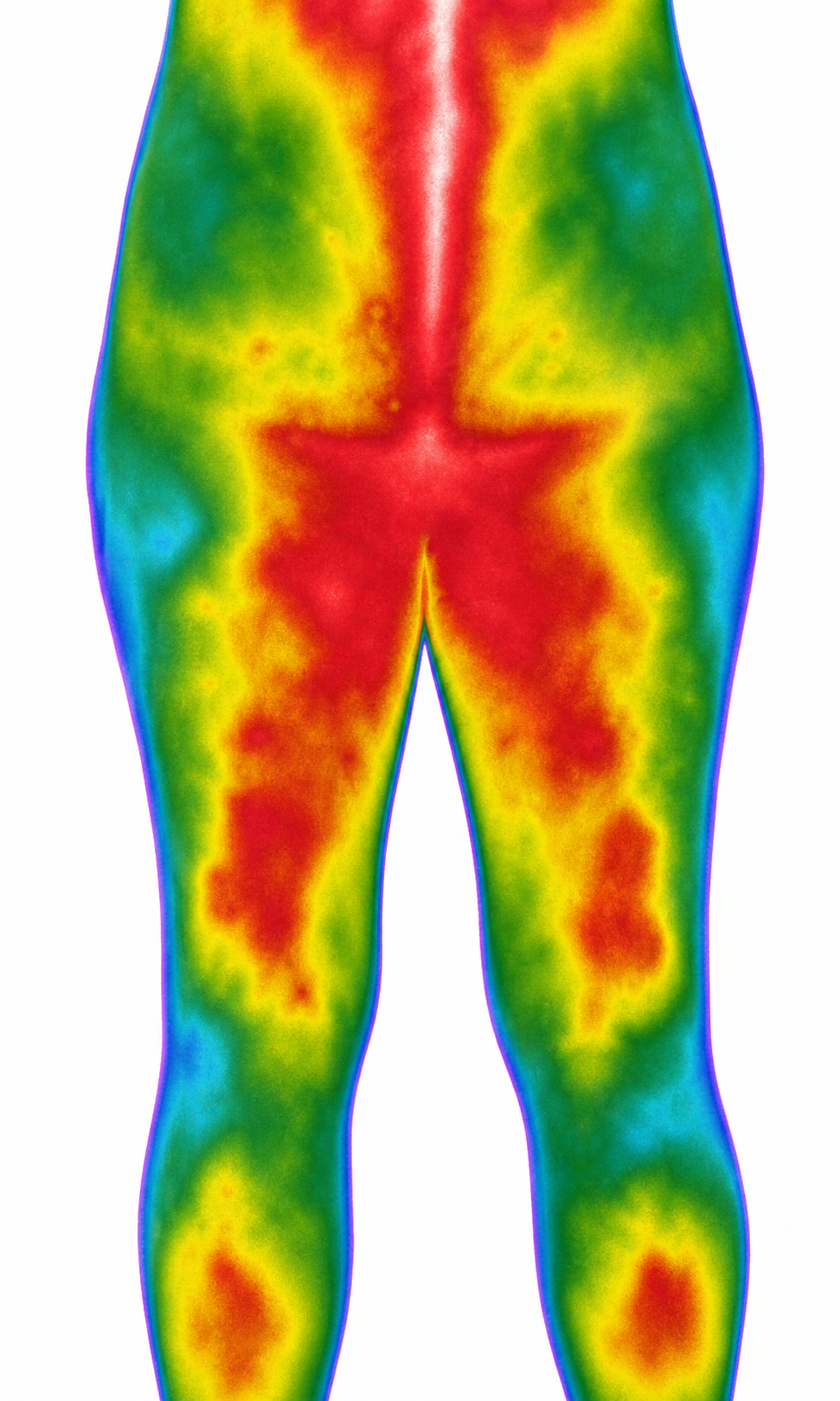
The Institute works so that medical thermology is understood as a serious functional technique: dependent on standardized acquisition, quantitative analysis, clinical interpretation, and well-defined limits.
Thermography does not describe shape, mass, fracture, or internal structure. It observes superficial thermal patterns related to function, perfusion, inflammation, and autonomic regulation.
The color palette helps the human eye, but responsible interpretation depends on the thermal matrix, regions of interest, comparison, and statistics.
Medical thermology must dialogue with clinical practice and other examinations. Its role is to complement functional questions, not replace anatomical or laboratory methods.
Physician with extensive experience in the treatment of chronic pain and palliative care, working in medical thermology and applied research in human health. As head of Termodiagnose Institute Brazil, he seeks to connect clinical practice, biomedical literature, data analysis, scientific training, and research development.
Environmental conditions, acclimatization, positioning, distance, emissivity, and technical documentation are part of the data.
Regions of interest, asymmetries, gradients, means, dispersion, and temporal evolution help separate observation from possible evidence.
No thermal pattern speaks alone. Interpretation depends on history, clinical examination, hypothesis, and appropriate complementary methods.
The Institute seeks to foster research, scientific education, co-mentorships, publications, and partnerships that strengthen medical thermology in Brazil.
Medical thermology advances when each image is treated as data, each data point as possible evidence, and each piece of evidence as part of a well-formulated clinical question.

The Termodiagnose Institute Brazil website was developed by Takotsubo Life Sciences, a Brazilian company dedicated to creating digital, scientific, and editorial solutions for health, research, and life sciences projects.