In children’s sports, performance and health mature together. Infrared thermography can record how the body responds to training, competition, and rest, creating a functional baseline that follows the young athlete over time.
The central idea of the study
The article by Volovik and Dolgov proposes the thermographic passport as a dynamic monitoring resource for children and adolescents involved in sports. The proposal is not to turn thermography into an isolated sports clearance test. The point is to build a functional history: how the body surface distributes heat at rest, after training, during recovery, and when load changes.
This logic fits sports physiology well. Active muscles modify the skin’s thermal topography; training adaptation, fatigue, incomplete recovery, and inflammatory processes can alter symmetry and regional temperature distribution. In young athletes, this reading must be even more careful because growth, biological maturation, body composition, and sport type interfere with the thermal pattern.
Initial thermomapping under standardized conditions to recognize the athlete’s individual pattern.
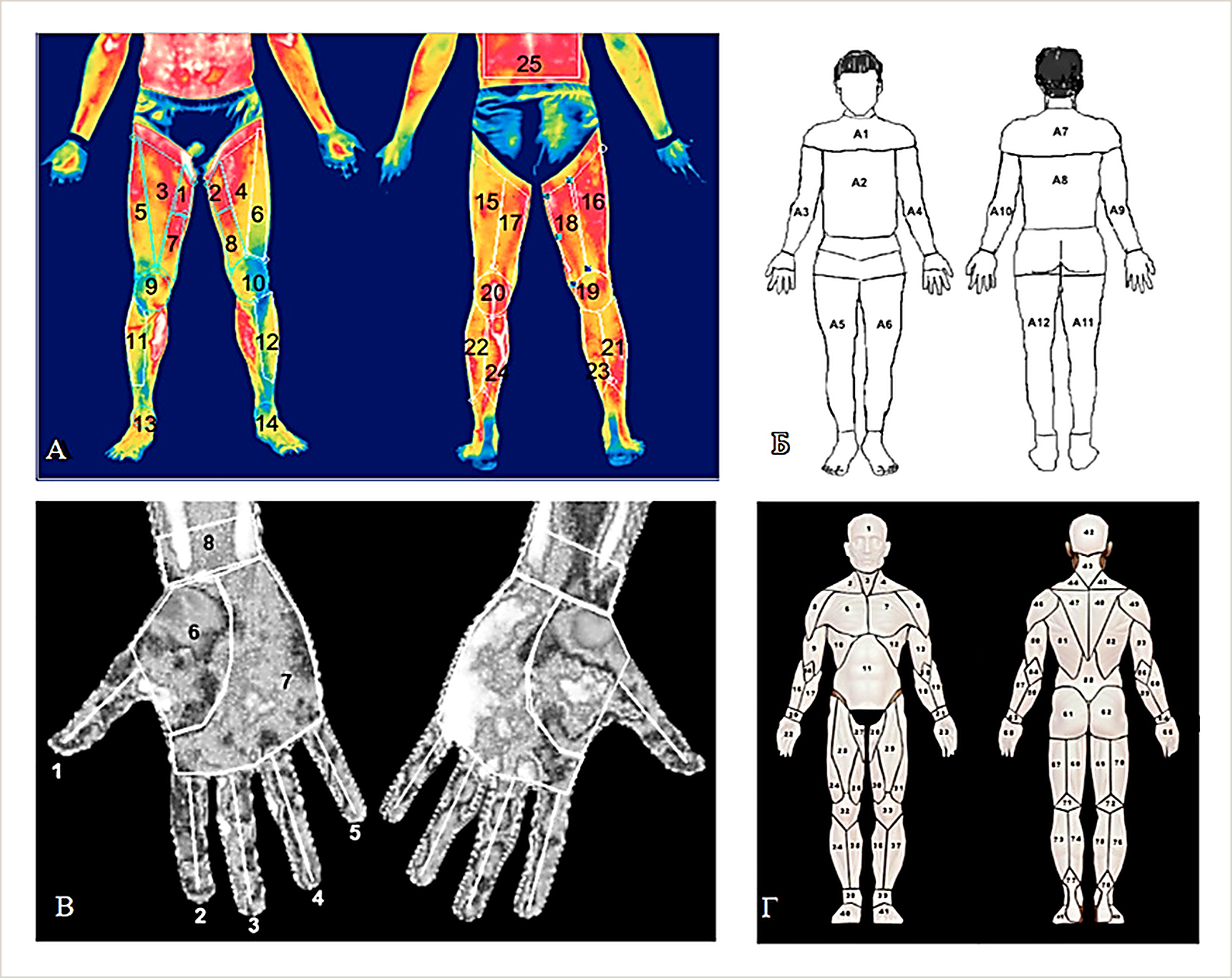
Regions of interest chosen according to the sport, dominant load, and most vulnerable areas.
Repeated acquisitions make it possible to compare training, competition, recovery, and gradual return to load.
Thermal data is interpreted alongside pain, physical examination, performance, sleep, load, schedule, and clinical assessment.
A thermal passport is not an isolated photograph
A single image may draw attention, but the value of the thermal passport lies in repetition. With each new acquisition, the athlete is not compared only with a generic average: they are compared with their own previous map under controlled conditions. This helps distinguish expected variation, sport-specific asymmetry, and signs that deserve closer observation.
environment, acclimatization, distance, emissivity, palette, and acquisition protocol
whole body or critical segments for the sport
symmetric ROIs and regions submitted to dominant load
rest, post-training, competition, recovery, and new exposure to load
prevention, training adjustment, rehabilitation, and clinical investigation when necessary
When asymmetry becomes a sign for attention
The article gathers references that use thermal difference between symmetric regions as a way to stratify attention. Interpretation should not be automatic: an asymmetric sport may produce expected asymmetries. Even so, when thermal delta appears outside the individual pattern or increases in vulnerable regions, the data may help anticipate investigation and load adjustment.
compatible with normality or stable remission during rehabilitation
follow evolution, symptoms, recent load, and repeated measurement
review training, recovery, technique, local pain, and possible mechanical factors
integrate clinical assessment and consider load reduction or targeted investigation
difference compatible with acute injury in the cited reference, requiring clinical correlation
Thermal asymmetry does not replace physical examination, clinical history, biomechanical assessment, or anatomical imaging when indicated. It adds functional data, especially useful when measured serially and interpreted within the sports context.
Time changes interpretation
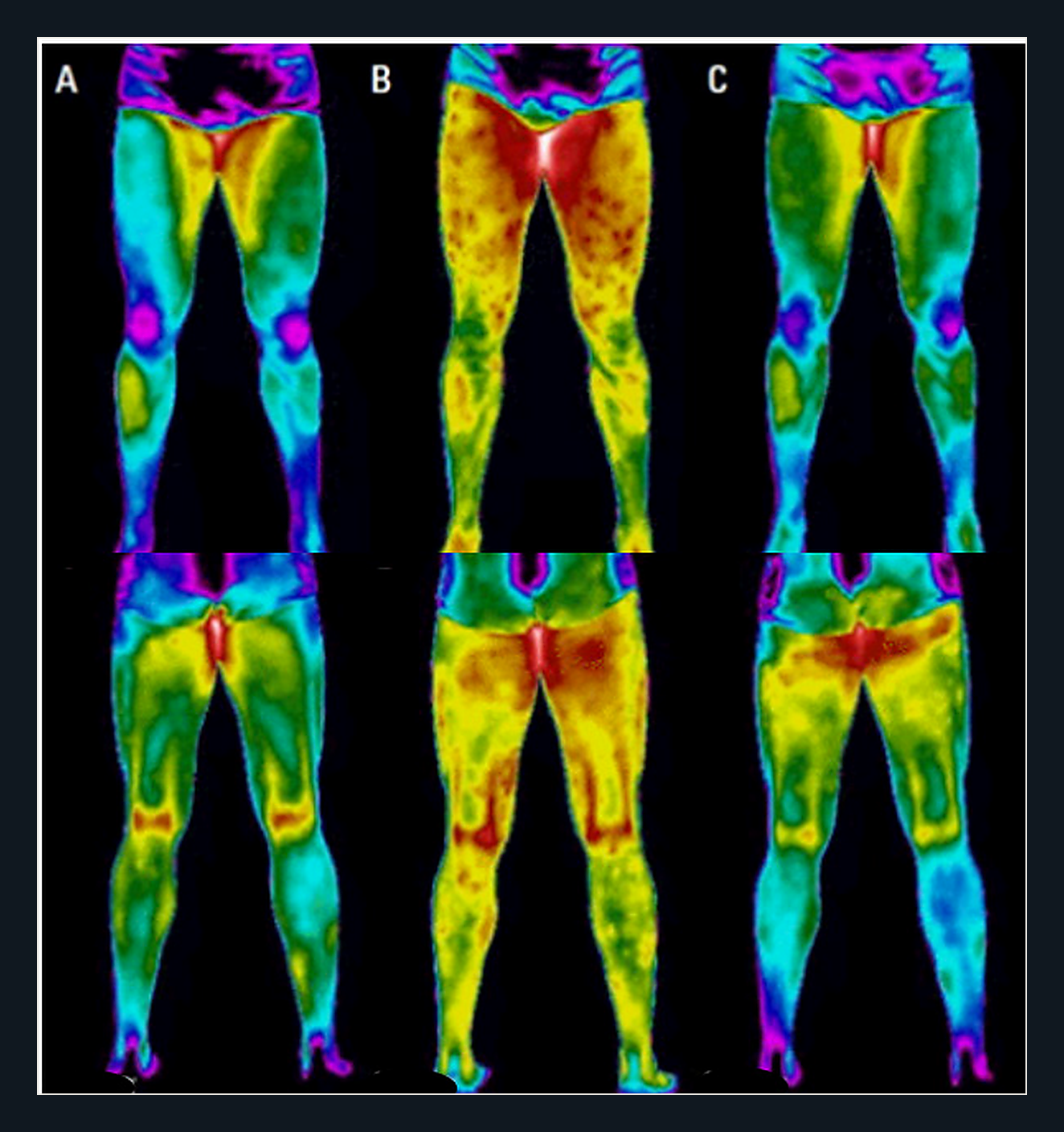
The sequence of lower-limb thermograms before and after a football match illustrates why acquisition timing matters. Skin may respond differently immediately after exertion, at 24 hours, and at 48 hours. What seems like an isolated change gains meaning when the recovery curve is observed.
This reasoning is central for children and adolescents. The goal is not to over-monitor the athlete, but to recognize when the body recovers well and when a pattern calls for rest, technical adjustment, strengthening, pain investigation, or revision of the competition schedule.
value reported in a meta-analysis for detecting musculoskeletal injuries with infrared thermography
result that reinforces usefulness as a functional screening tool, not as an isolated diagnosis
the region must be repeatable for thermal change to be interpretable over time
Children are not miniature adults
The review highlights an important gap: much methodology has been built in adults and elite athletes, but it remains necessary to better understand how maturation, growth, sex, body composition, and developmental stages modify thermal response in children. For this reason, the children’s thermal passport should be viewed as a monitoring program, not a rigid ruler.
The strength of the proposal lies precisely in individualization. The young athlete gains their own history, and the professional gains a way to observe adaptation, overload, and recovery with greater continuity.
The topic is no longer a technical curiosity.
The survey presented in the article shows a sharp increase in publications on thermography in sport after 2010. This growth does not answer clinical questions by itself, but it reveals maturation of the field and greater interest in quantitative protocols.
How this approach connects with Termodiagnose
The thermal passport is a good metaphor for medical thermology: measure, repeat, compare, and interpret in context. Instead of looking for a striking color, attention turns to the thermal matrix, protocol, ROI, asymmetry, recovery, and clinical coherence.
In translational practice, this type of monitoring can bring together sport, physiology, pain medicine, rehabilitation, and data science. Thermography does not replace ultrasound, MRI, laboratory tests, or medical assessment. It offers a functional layer that helps formulate better questions about adaptation and risk.
Main reference
Volovik MG, Dolgov IM. Thermal Imaging Health Passport for a Child Engaged in Sports as the Basis for Dynamic Monitoring of Their Success in a Chosen Sport. Medical Alphabet. 2024;22:42-48.
Editorial commentary published by the Termodiagnose Journal. The text interprets the original article and preserves the distinction between functional monitoring, prevention, and clinical diagnosis.