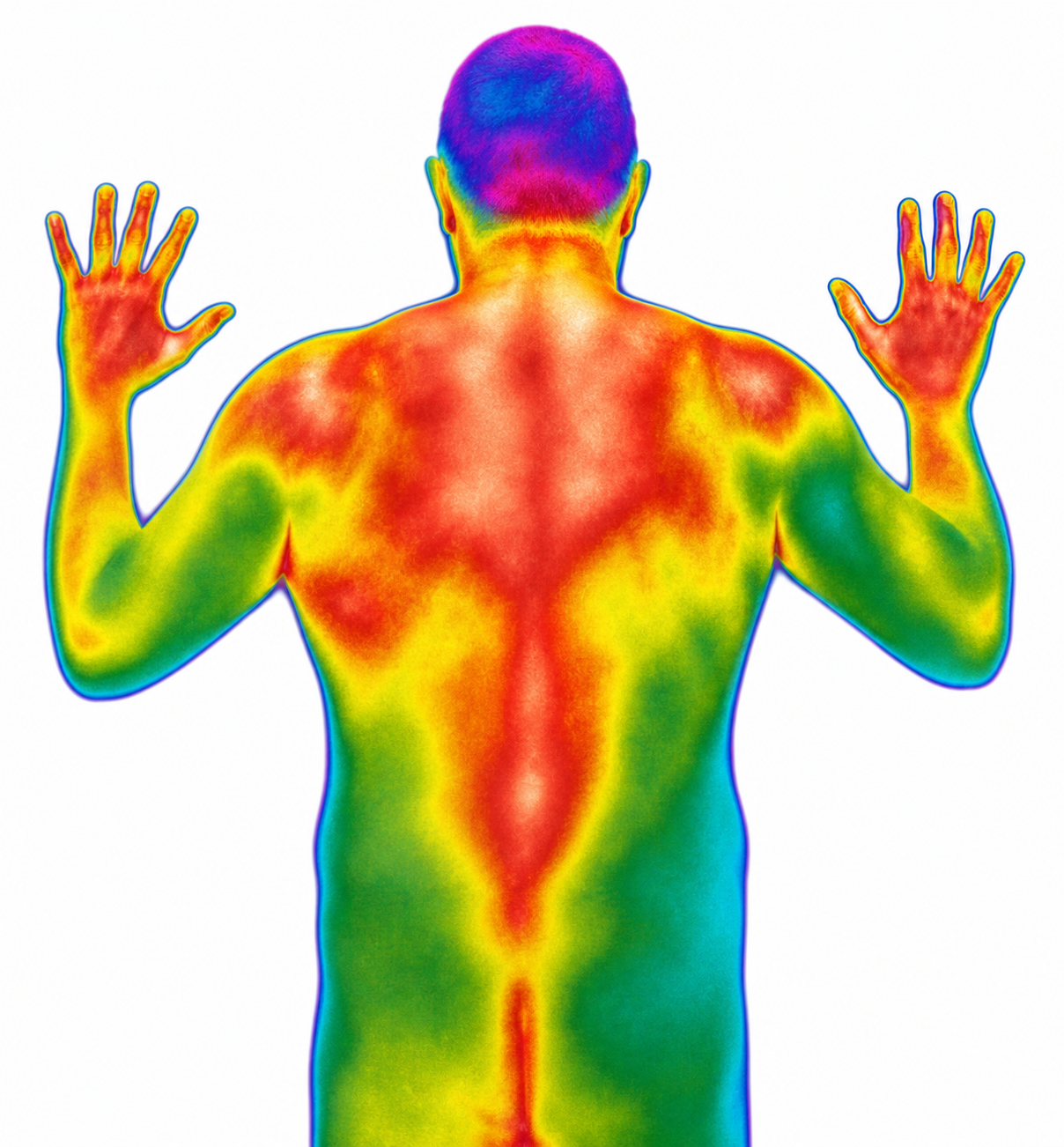
Medical imaging shows structure. Thermography shows function.
Where nearly a decade of medical thermography practice meets data science — to turn the heat of the human body into measurable evidence about pain, inflammation, and vascular function.
Research at the center. Clinical practice and training as a horizon.
The institute is currently focused on scientific production and research partnerships. Clinical and educational fronts remain active as areas of interest for the future.
Research
Lines in thermography, chronic pain, vascular function, and data science applied to health.
View lines → ii.Publications
Indexed output and public ORCID profile, with selected discussions in the editorial journal.
View publications → iii.Partnerships
Collaborations with universities, research groups, and industry / life sciences organizations.
Talk to the institute →Studies, evidence, and clinical discussion.
How a thermal camera works: from the bolometer to the thermal matrix
A technical and didactic explanation of thermal sensors, microbolometers, Planck’s law, emissivity, color palettes, and radiometric ROI analysis.
Joint hypermobility, chronic pain, and thermography
Uma leitura editorial do estudo publicado no Yale Journal of Biology and Medicine sobre matriz térmica, dor crônica, hipermobilidade articular e uso…
Medical thermography, in one sentence.
It is an imaging exam that captures infrared radiation emitted by the skin to map, with fractional precision, thermal patterns related to inflammation, pain, vascularization, and autonomic function — without contact, without ionizing radiation, without contrast.
Recognized by ANS (Tabela AMB 39.01.007-4 · CBHPM 41.50.11.36), thermography is a complementary exam — never used alone. Its interpretation requires long training, controlled protocol, and clinical correlation.
More about the institute →- a.Non-invasive and painless. No physical contact, no ionizing radiation, no injectable contrast.
- b.Functional, not anatomical. Measures thermal physiology, not structures — complements anatomical imaging.
- c.Repeatable. Can be performed as often as clinically useful, with no cumulative dose.
- d.Standardized. Requires controlled protocol for acclimation, capture, and reporting.
Let's turn heat into knowledge.
The institute is open to academic and industry collaborations in medical thermology, infrared thermography, chronic pain, and data science in health.